Raspberry Pi 4 + 4G HAT Case
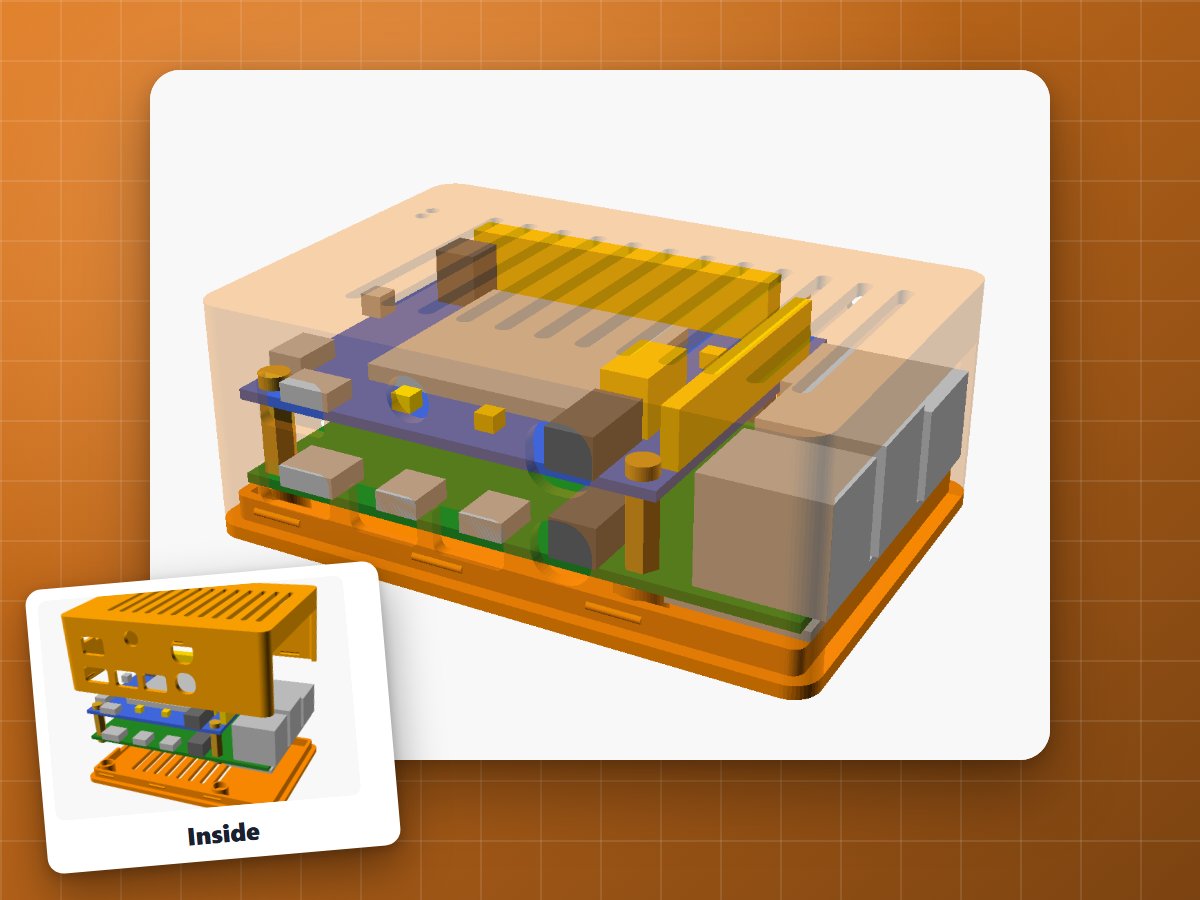
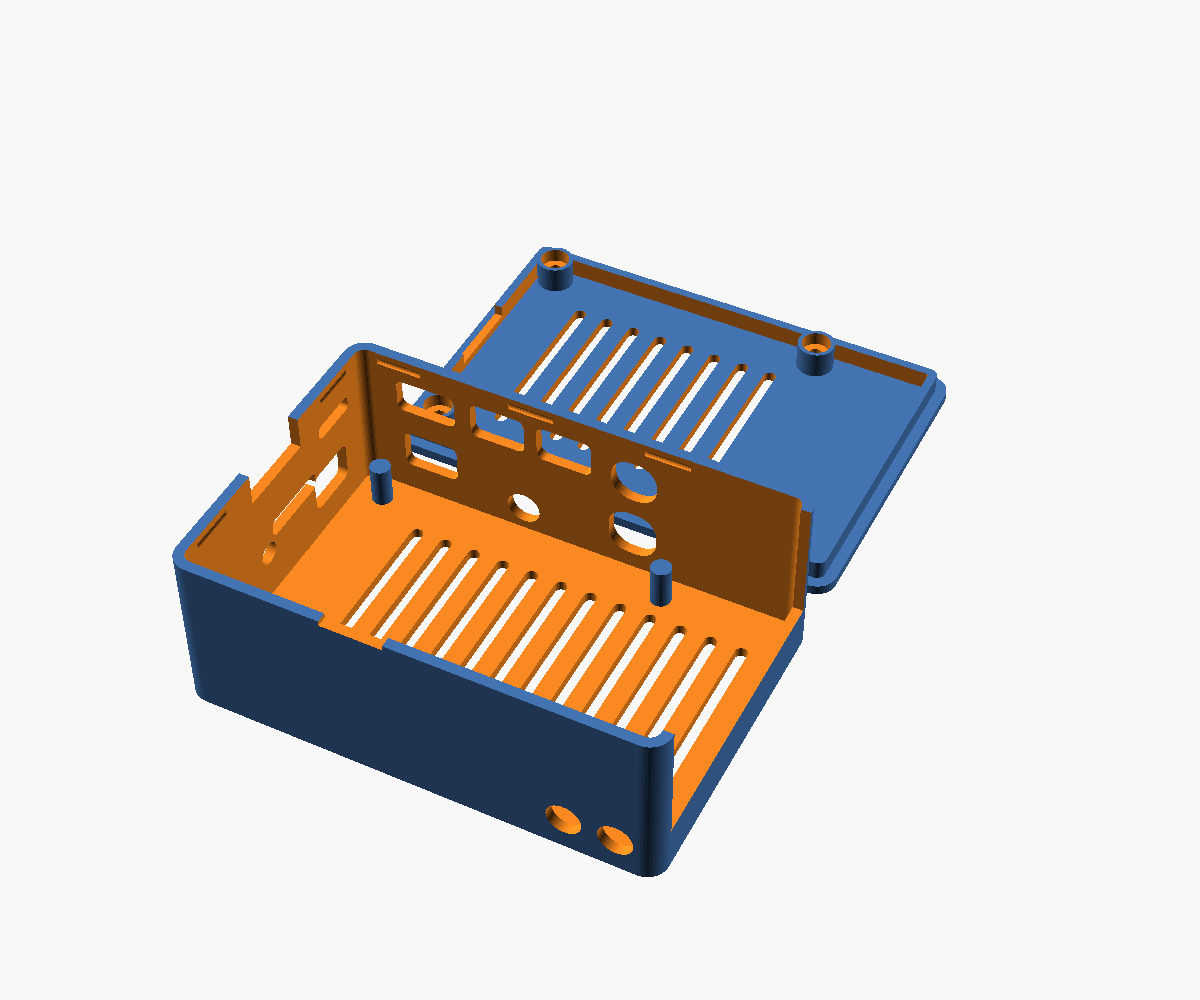
A snap-together 3D-printed case for a Raspberry Pi 4 with a Waveshare SIM7600 4G board on top, with holes for the antenna cables.
Work in progress. Designed and fit-checked on the computer, but not printed yet.
What you need
What it is
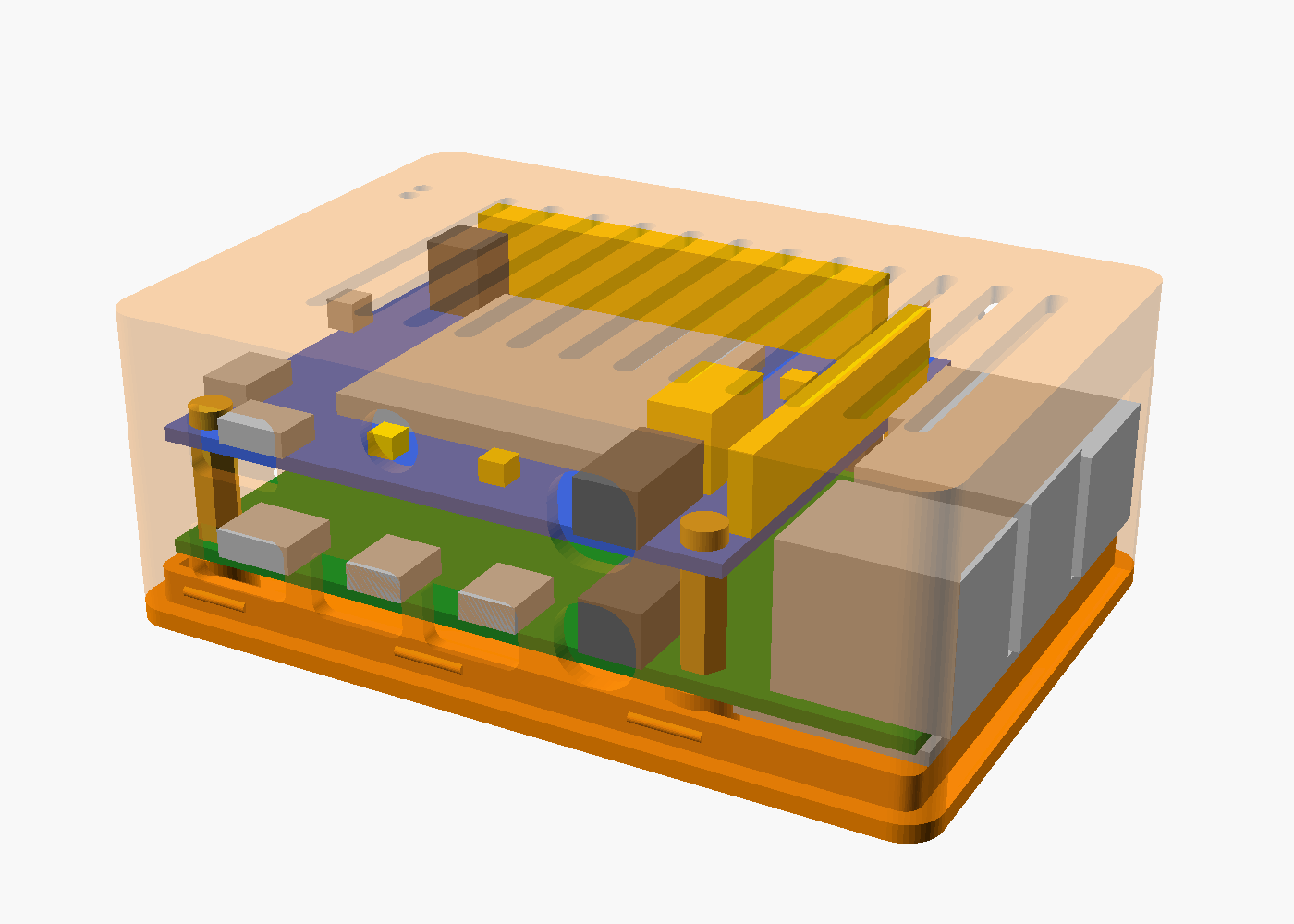
A Raspberry Pi with a 4G board on top can get online anywhere with a SIM card, which is great for projects that leave the house. This case holds both boards stacked together, leaves the USB and network ports open, and has three round holes for the antenna cables. Two parts, no screws: the lid snaps on.
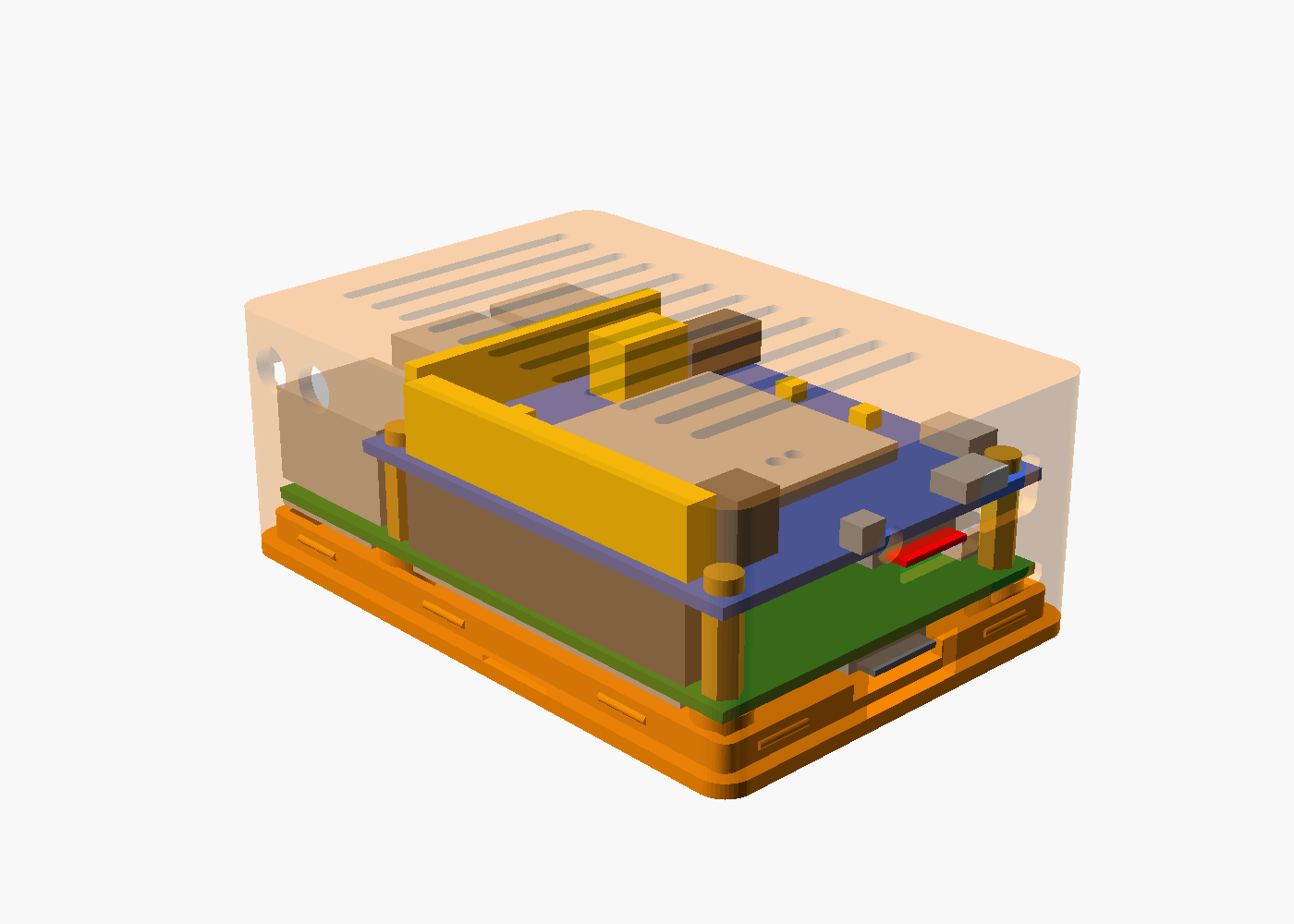
Assembled, it's about 92 x 63 x 36 mm.
Printing it
- Material: PLA or PETG
- Layers: 0.2 mm, 3 walls, 20% infill
- Supports: none. Print each part exactly as it lands on the bed. The lid prints roof-down, and the printer bridges over the small port holes, which is normal.
Putting it together
1SIM card first
The SIM holder is on the underside of the 4G board, so put the SIM card in before stacking the boards. Put the Pi's micro-SD card in too.
2Stack the boards
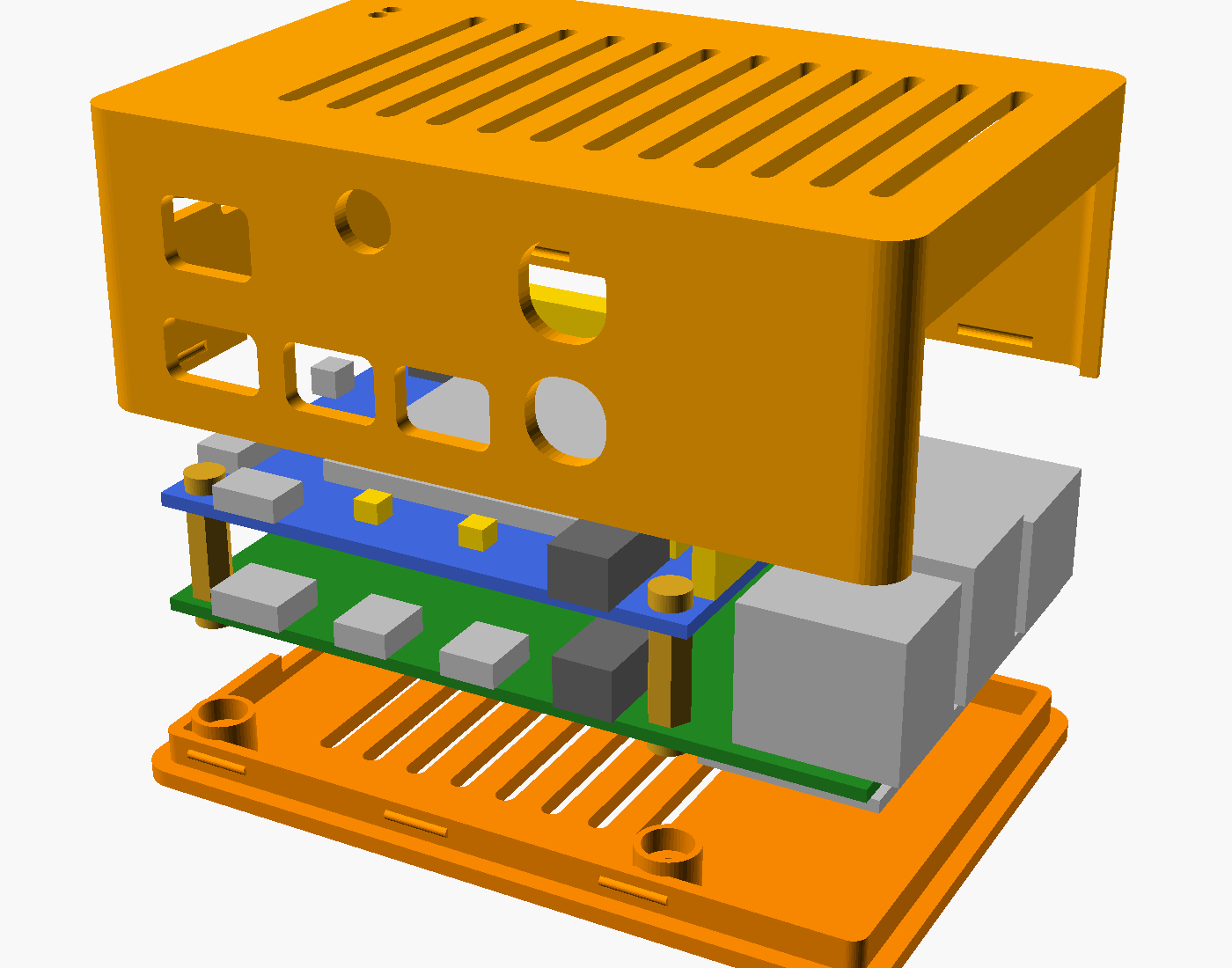
Stack the 4G board on the Pi using the brass posts and screws it came with.
3Into the base
Set the stack into the base. The screw heads under the Pi drop into four round pockets, and the USB and network ports face the open end.
4Antennas
Press each antenna cable onto its gold socket on the 4G board until it clicks: MAIN is the important 4G one, GNSS is GPS, AUX is an optional second 4G antenna. Route each cable out through one of the round holes (one on the front, two on the back).
- Cable with a threaded gold connector and a nut (SMA): push it through the hole from inside, then screw the nut on outside.
- Thin cable with a tiny snap plug: feed the plug through the hole from outside, then snap it onto the board.
5Lid
Lower the lid straight down, open end over the ports, and press until it clicks.
If it doesn't fit
The case assumes the posts between the Pi and the 4G board are 11.5 mm tall. If the 4G board's ports don't line up with the holes, measure your posts and change hat_gap at the top of the design file, then export it again with OpenSCAD.